Bridging the Real-Time Care Gap for India’s Anxiety Epidemic
Client
Conceptual (Personal Project)
My Role
Product Designer
Industry
Health & Wellness
Timeline & Status
8 weeks—Complete
TLDR;
There are many young adults in India who deal with anxiety in their busy day-to-day activities and need a solution that would support them through this issue. Copup is a mobile application that connects with wearable technology to give anxiety relief from anywhere. This built through extensive surveying, interviewing, cultural and medical research to create a digital platform that address their hardships.
DISCOVER
Anxiety is a Prevalent Problem, and There's a Support Gap to Fill
An Indian Express article stated that 88% of young Indian adults suffer with anxiety shocked me, and I knew it was something I wanted to help address. I created a Google survey for these young adults (ages 18-27) who experience anxiety to gain insights on the topic following a workshop with my team. I focused on the question, "Do users really need a new resource to help manage their anxiety?" to guide the survey questions, ultimately receiving 31 valuable responses.
58% of surveyors agreed with the statement:
"I feel inhibited by my anxiety"
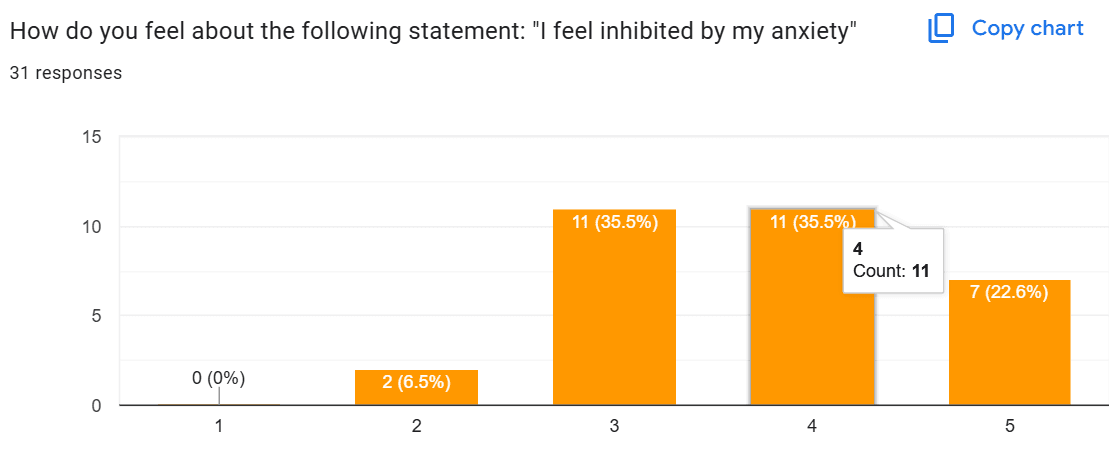
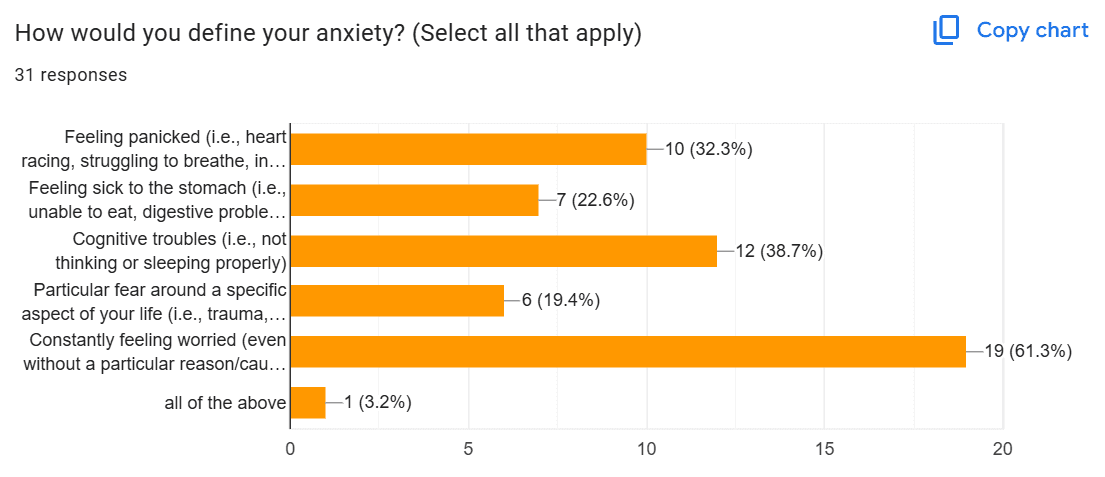
Surveyors expressed constant sense of worrying as their primary issue
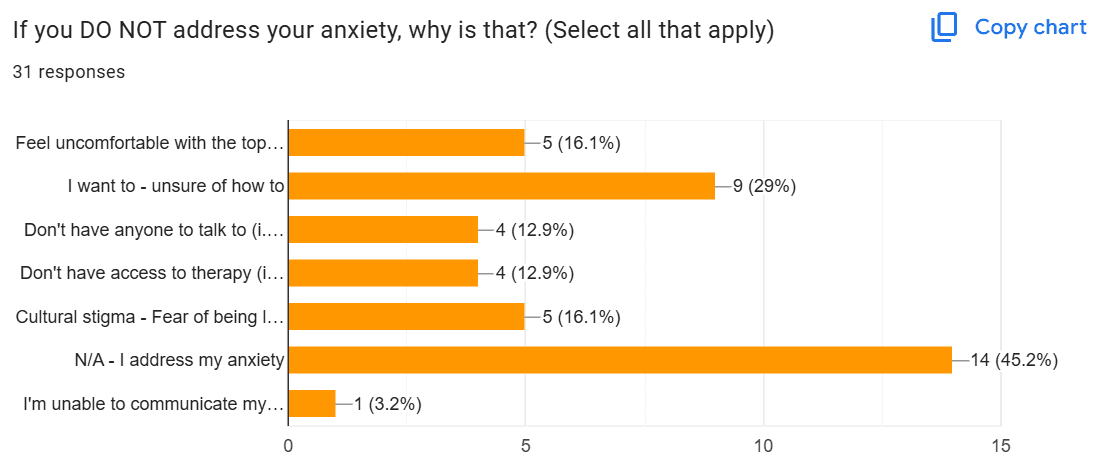
Lack of resources and cultural stigma most impacted those who don't address their anxiety
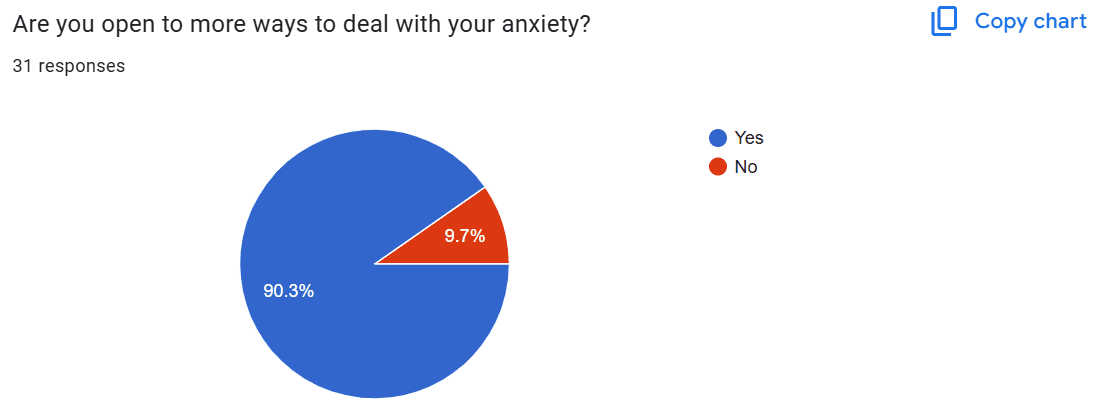
90% of surveyors were open to other ways to deal with their anxiety
SOLUTION
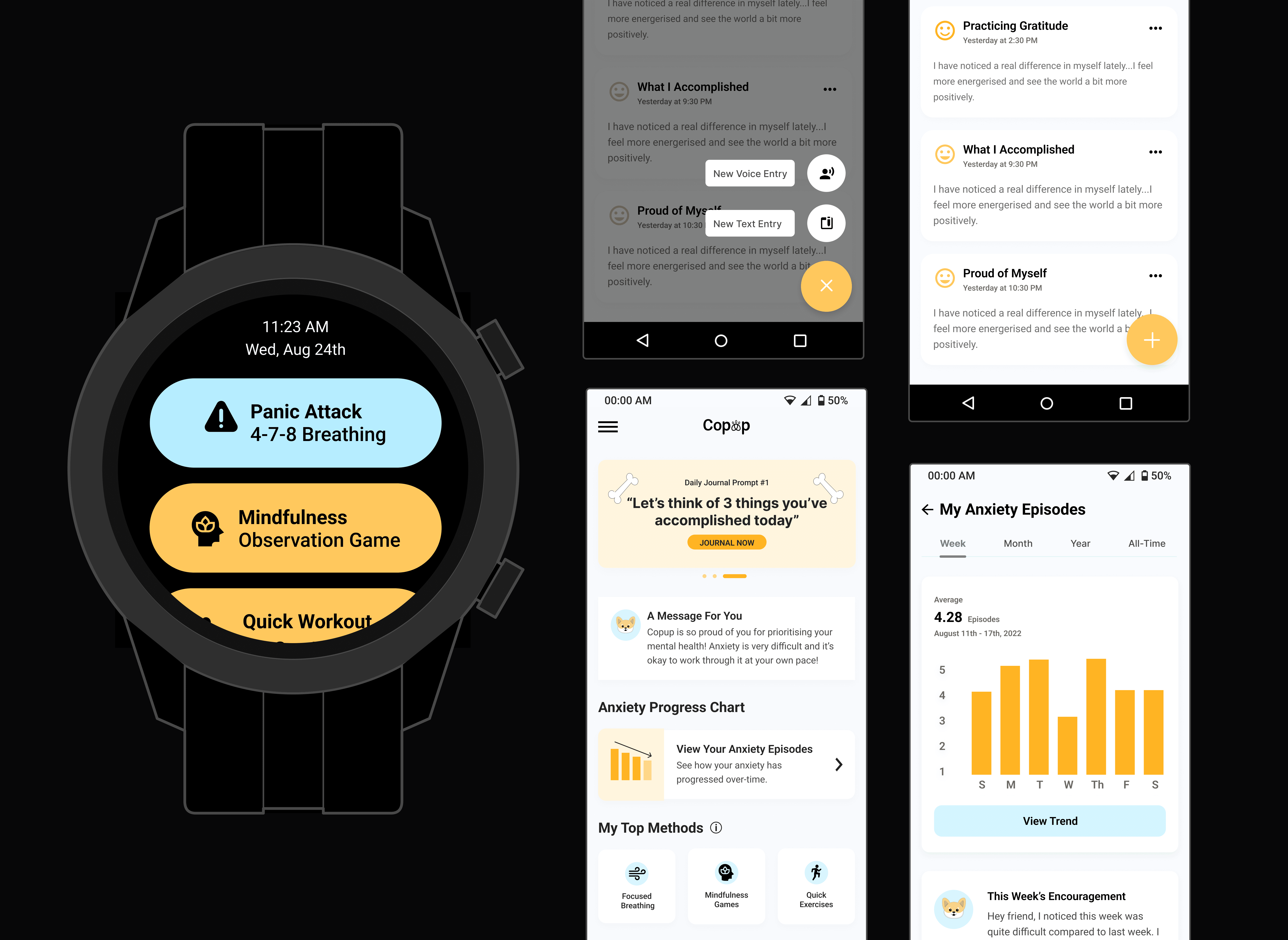
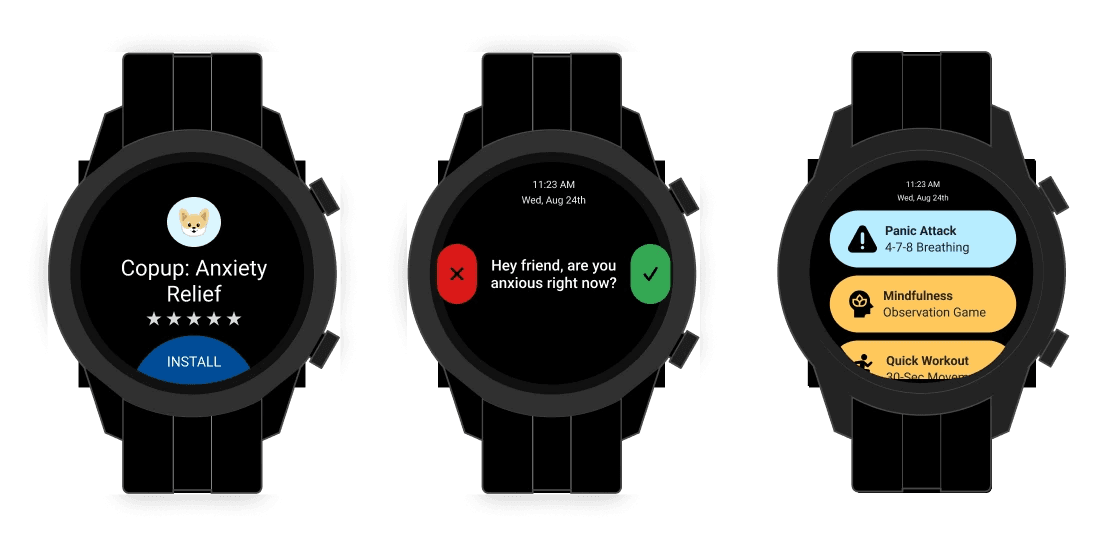
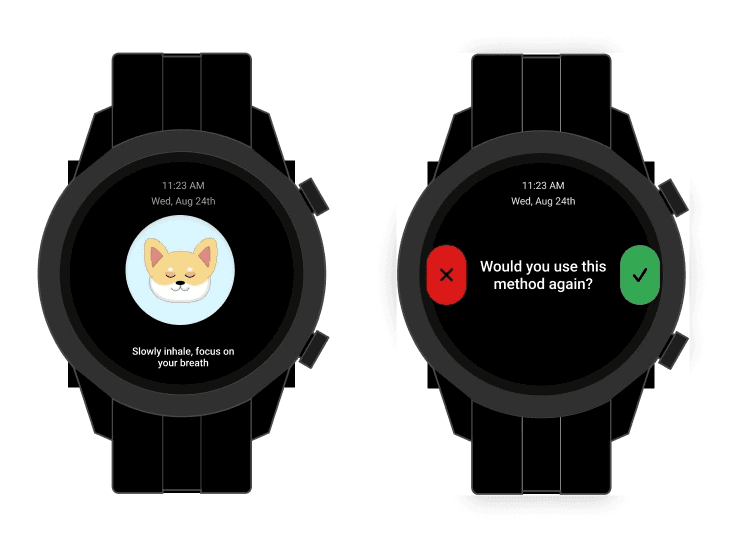
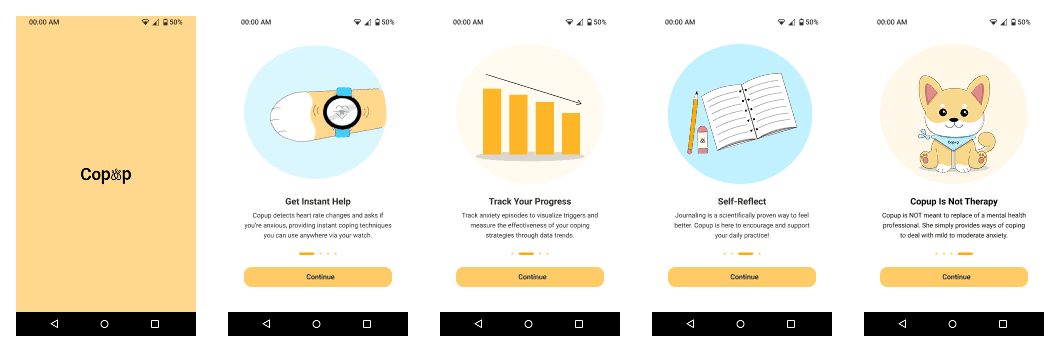
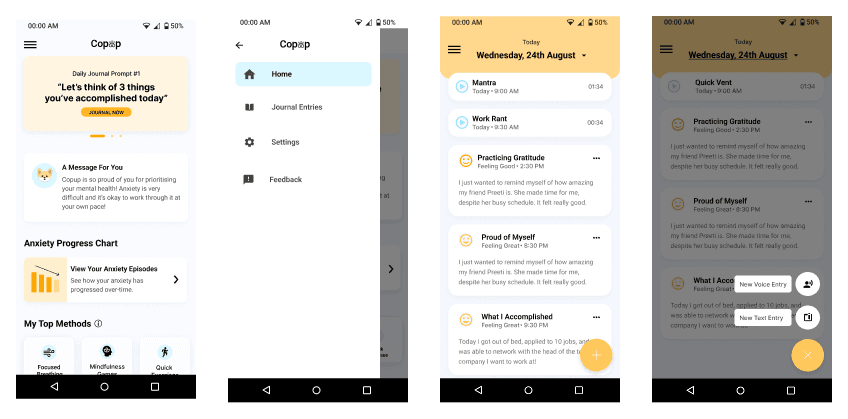
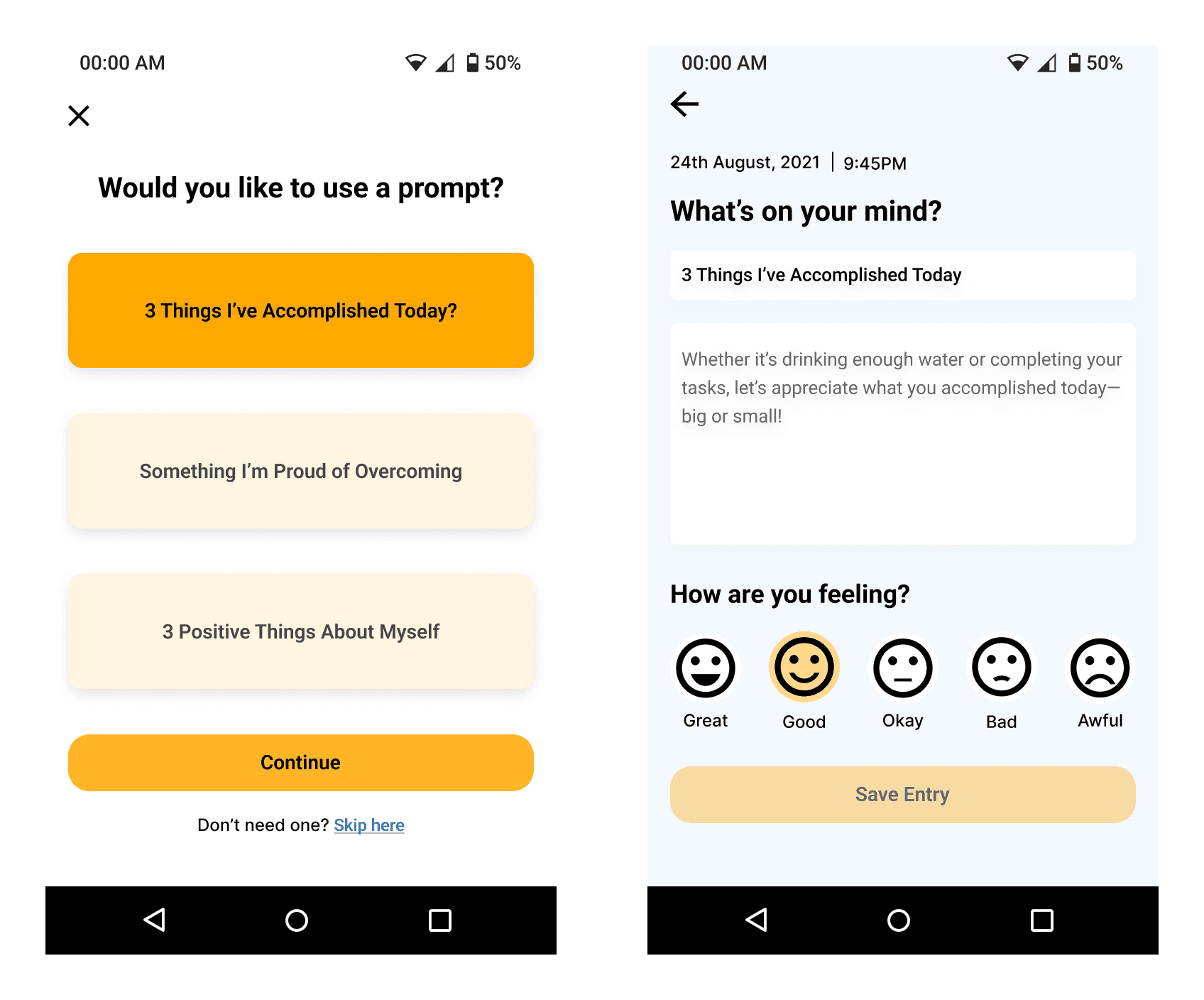
A Wearable-First Approach to Real-Time Mental Health
Using the growing smart-watch craze and app support to address impeding anxiety episodes in public spaces.
DEFINE
Designing for the Busy and Cost-Conscious
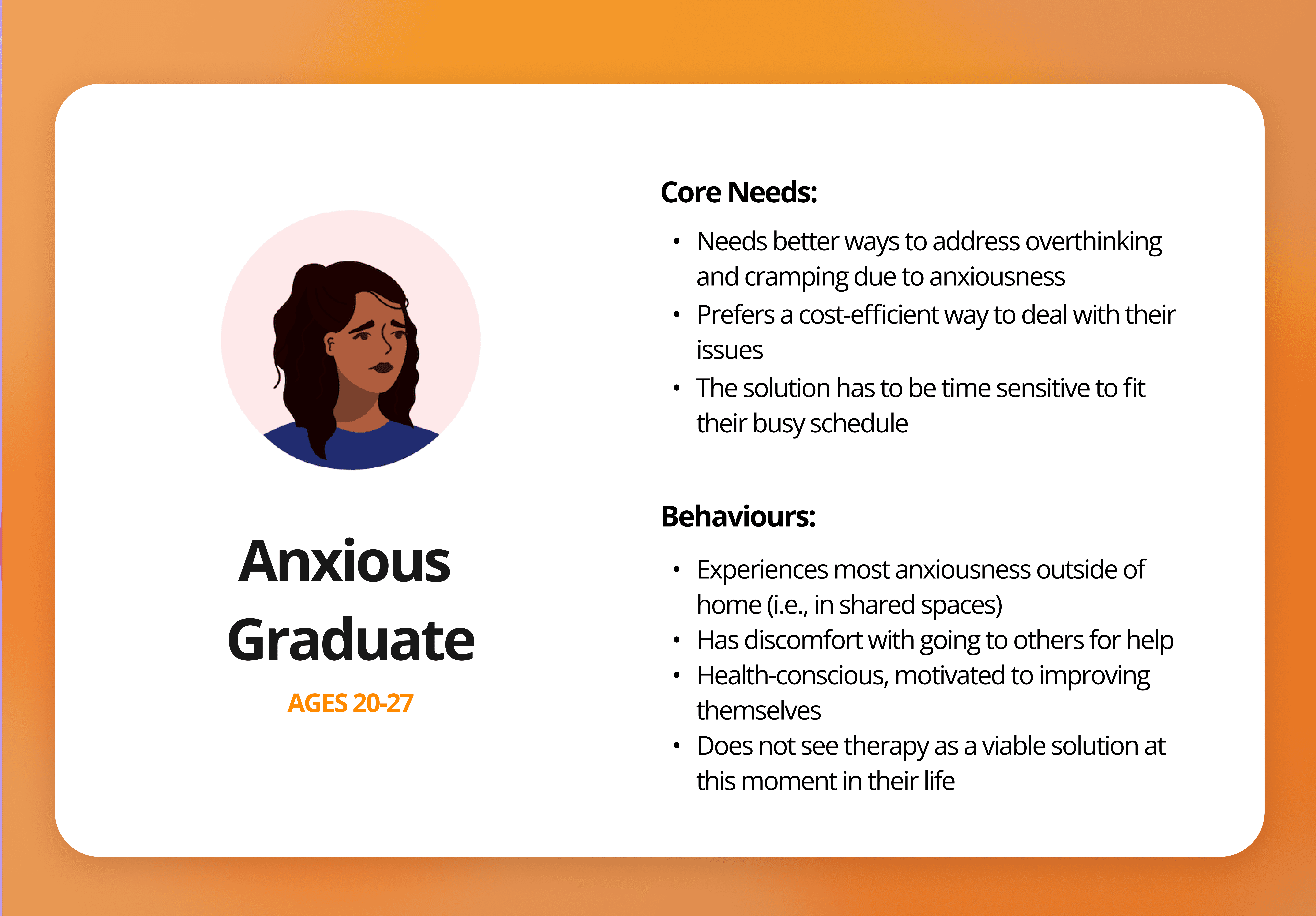
Through the survey, I helped us confirm the value of our product and identified our target audience (split into 3 specific groups): a) individuals more inhibited by anxiety, b) those who feel unsure or uncomfortable with their anxiety, and c) late university students or recent graduates. I reviewed the volunteers and selected 8 individuals for a structured interview who best fit these criteria.
The Verdict
8/8 users interviewed live 12-hour days. They don’t have a "support void" because they’re lazy; they have one because traditional care doesn’t fit their reality.
"I have an internship and work from 8:30 AM to 8:00 PM."
Rebekah, Age 24
"It's mainly at work… Where the anxiety comes like a cycle."
Saatvika, Age 23
"I want to cope and relax, but I don't know how to get it."
Supriya, Age 21
"I'm open to therapy but don't have time to go because of work and costs."
Preeti, Age 22
"I get onto YouTube or search specific techniques online to help."
Prakhar, Age 25
IDEATION PROCESS
Medical Expert Advice & Workshopping Led Us to a Smartwatch Solution
Realizing our limited perspective on anxiety relief, I consulted a therapist with 13 years of experience. She guided us to focus on building distress tolerance and mindfulness using DBT skills, along with journaling and self-reflection, which shaped our brainstorming process (below are my ideations).
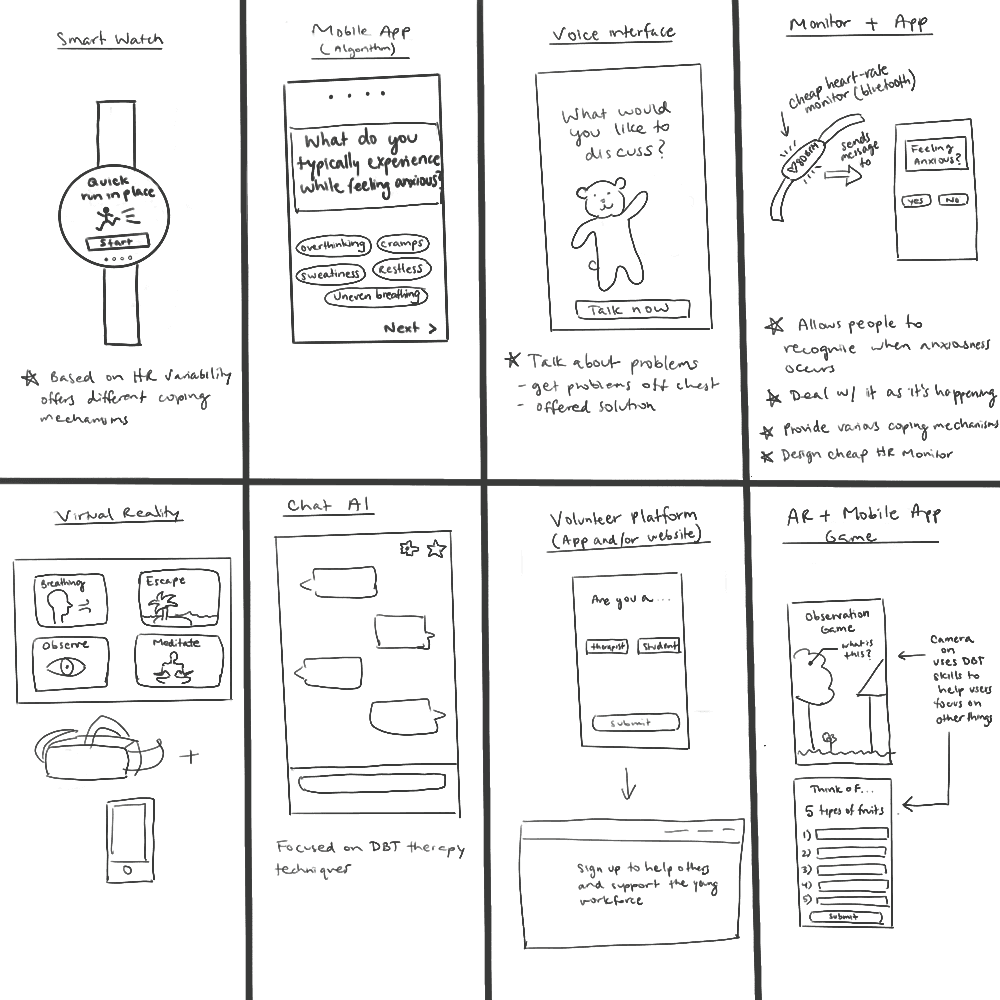
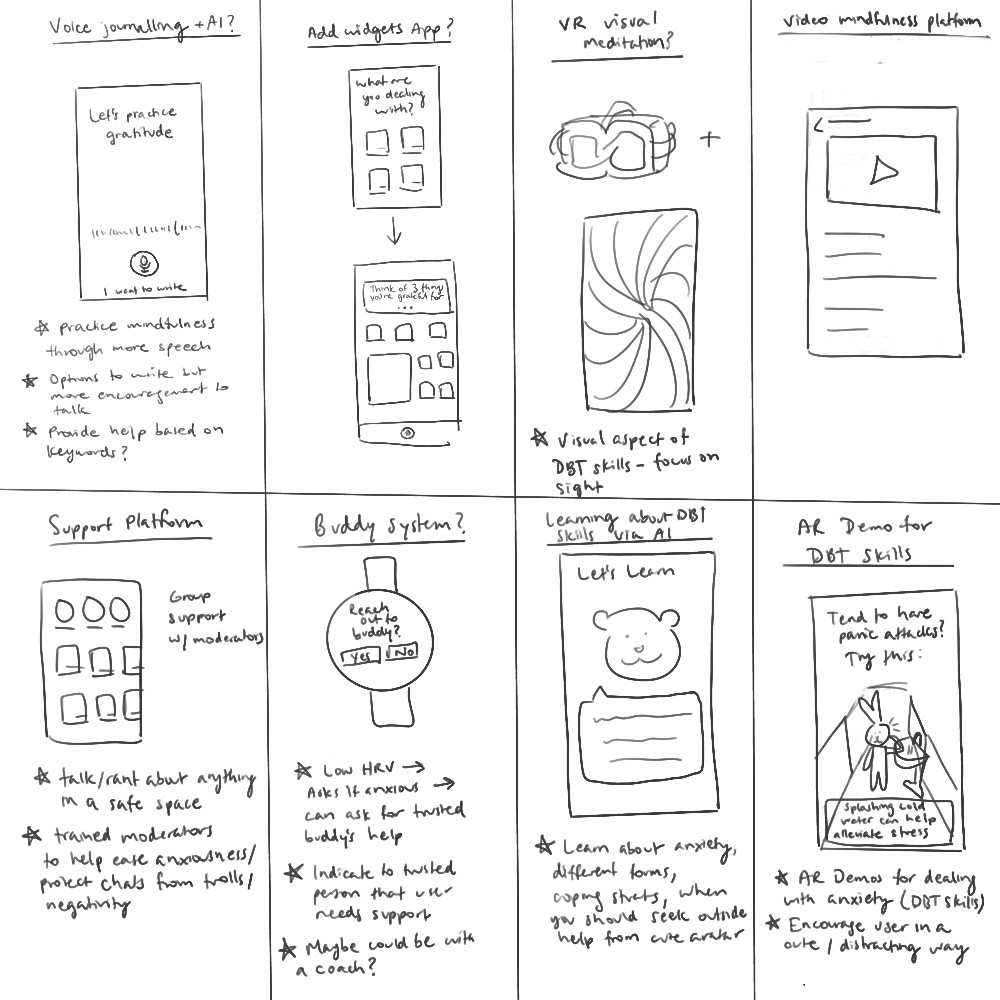
From solutions involving the metaverse to designing a service for users to get in touch with voluntary therapists/specialists, we exhausted every avenue. After a couple weeks of deep brainstorming, considering the user's needs and value proposals, we settled on our platform.
Why a Smartwatch and Mobile App?
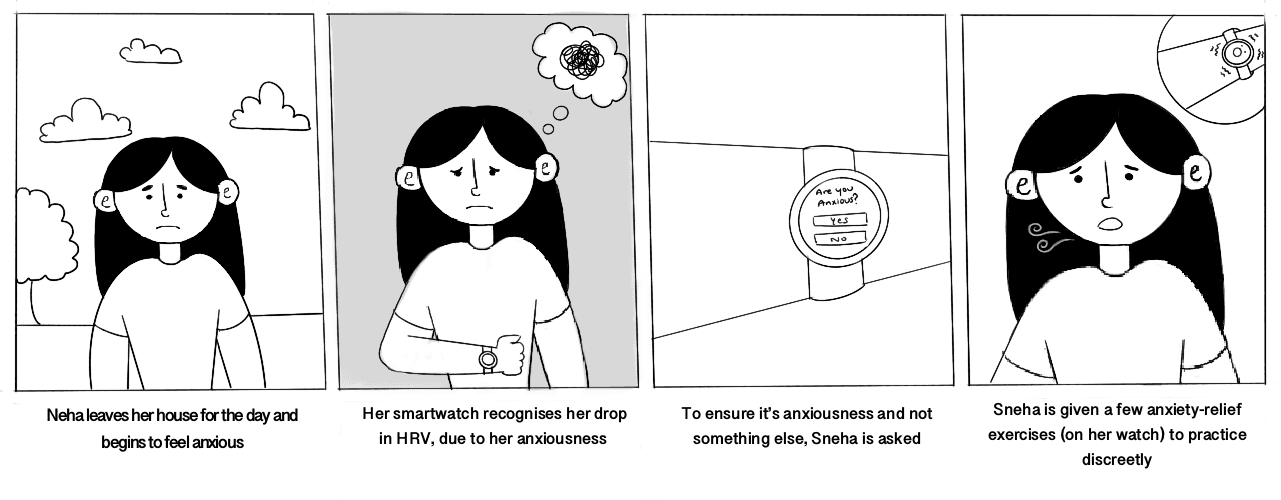
Mobility
Our base needs a solution that can be used virtually anywhere
and subtly
Bottom-Up Processing
Providing care as anxiety occurs through sensory information and support
Growing Market
Young adults are growing more health-conscious and buying wearable tech (AllHealthTech)
COMPETITIVE ANALYSIS
Mapping Features Rooted in Instant Relief From Anywhere
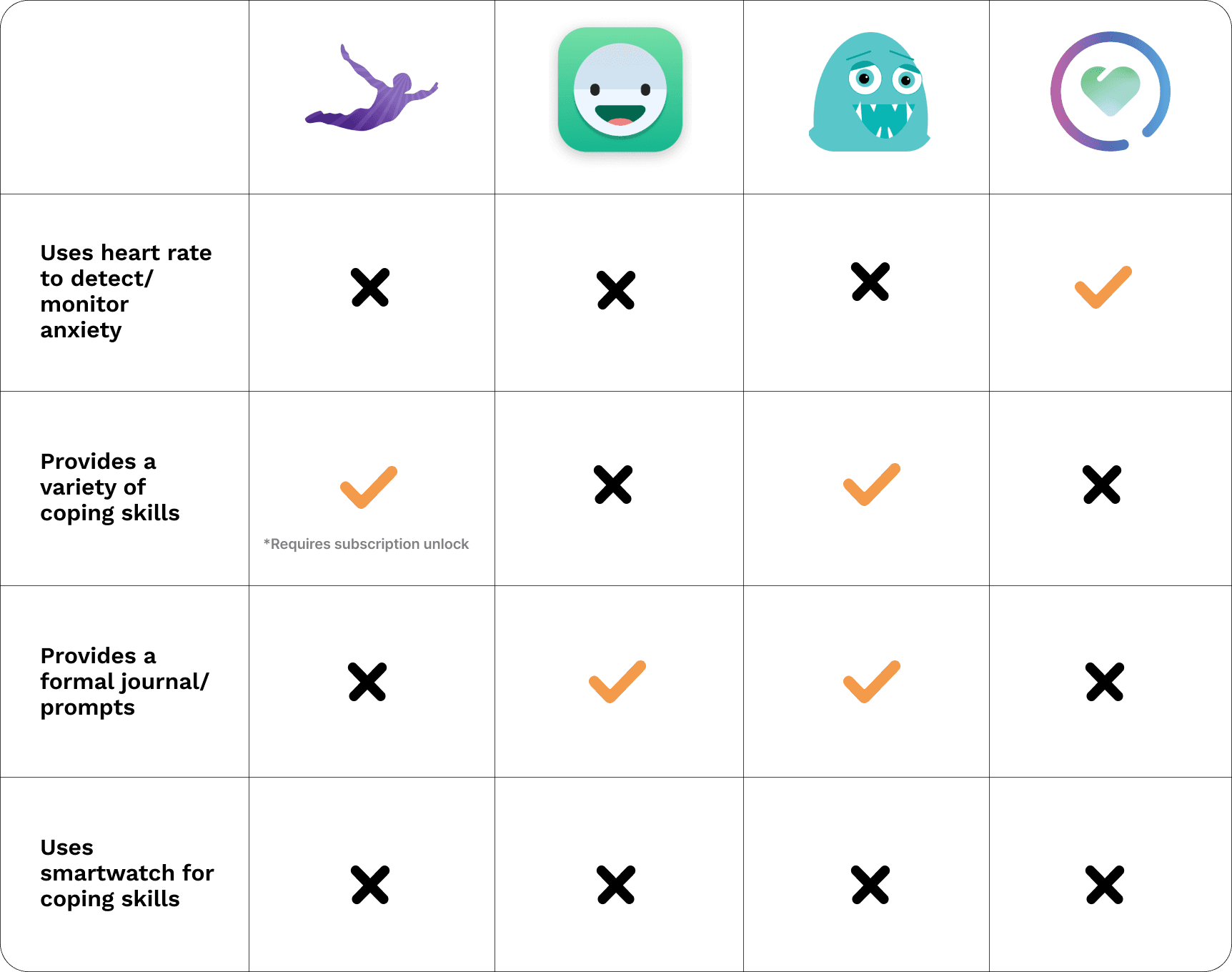
While brainstorming, I analyzed existing apps that are direct competitors and identified a gap in the market for apps that capture anxiety in real-time and offer actionable solutions. Presenting this to my team, we recognized it as a key advantage for our product and began outlining our features.
COMPETITIVE ANALYSIS
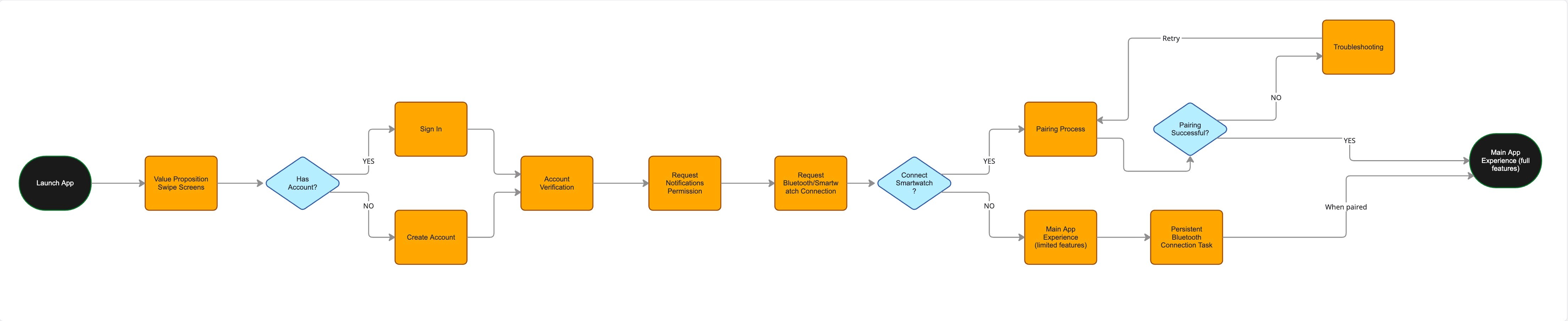
Using UserFlows for Hi-Level Design Planning
While brainstorming, I analyzed existing apps that are direct competitors and identified a gap in the market for apps that capture anxiety in real-time and offer actionable solutions. Presenting this to my team, we recognized it as a key advantage for our product and began outlining our features.
USER TESTING
Iterative Desiging Through Multi-Phase User Testing
I completed the low-fidelity wireframes and linked the screens into a prototype. I then conducted two sets of usability tests: one moderated with 4 target users and another unmoderated with 10 users via the site Maze. I used Task Success Rate (TSR) as my main KPI. After discussing with my team, I iterated on our first designs.
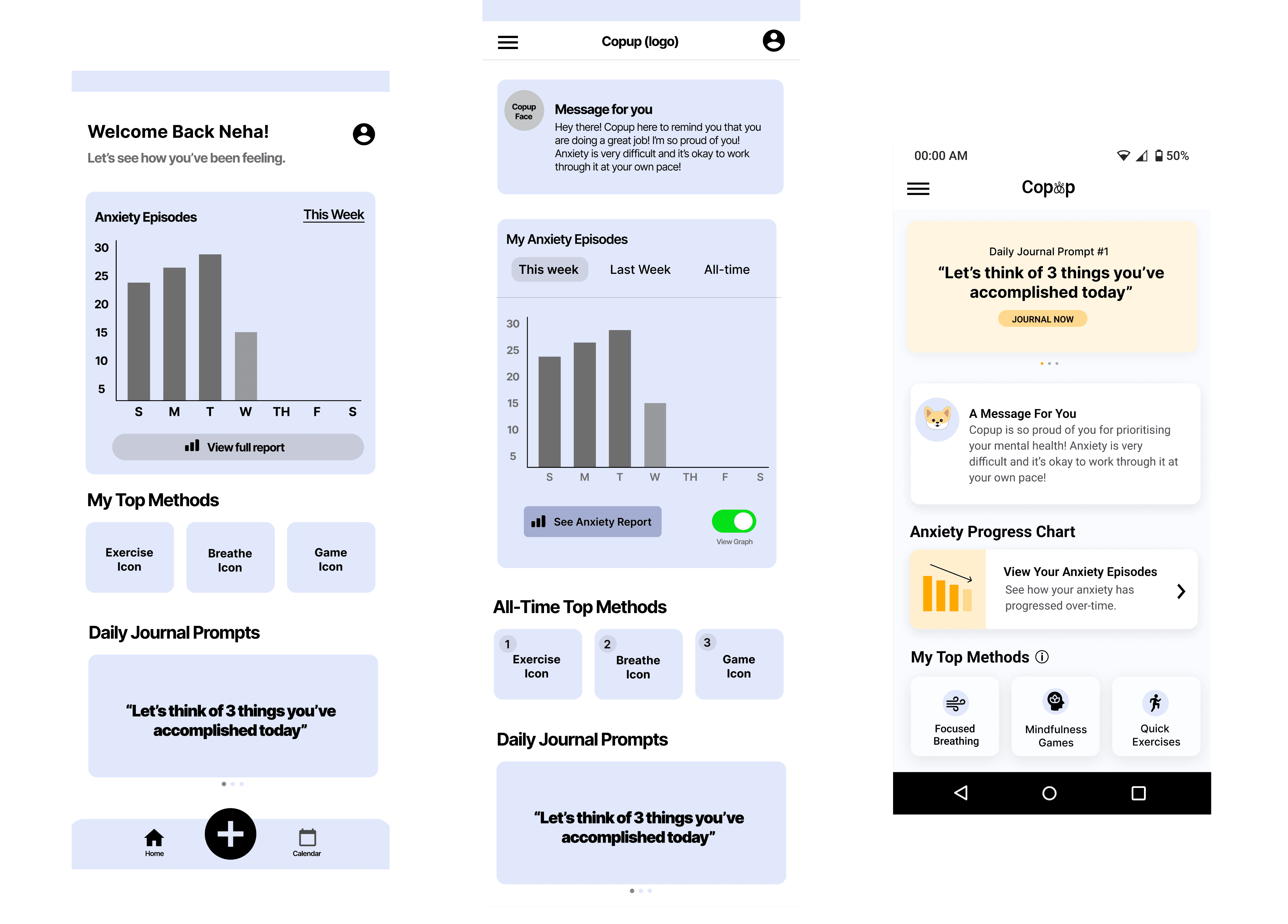
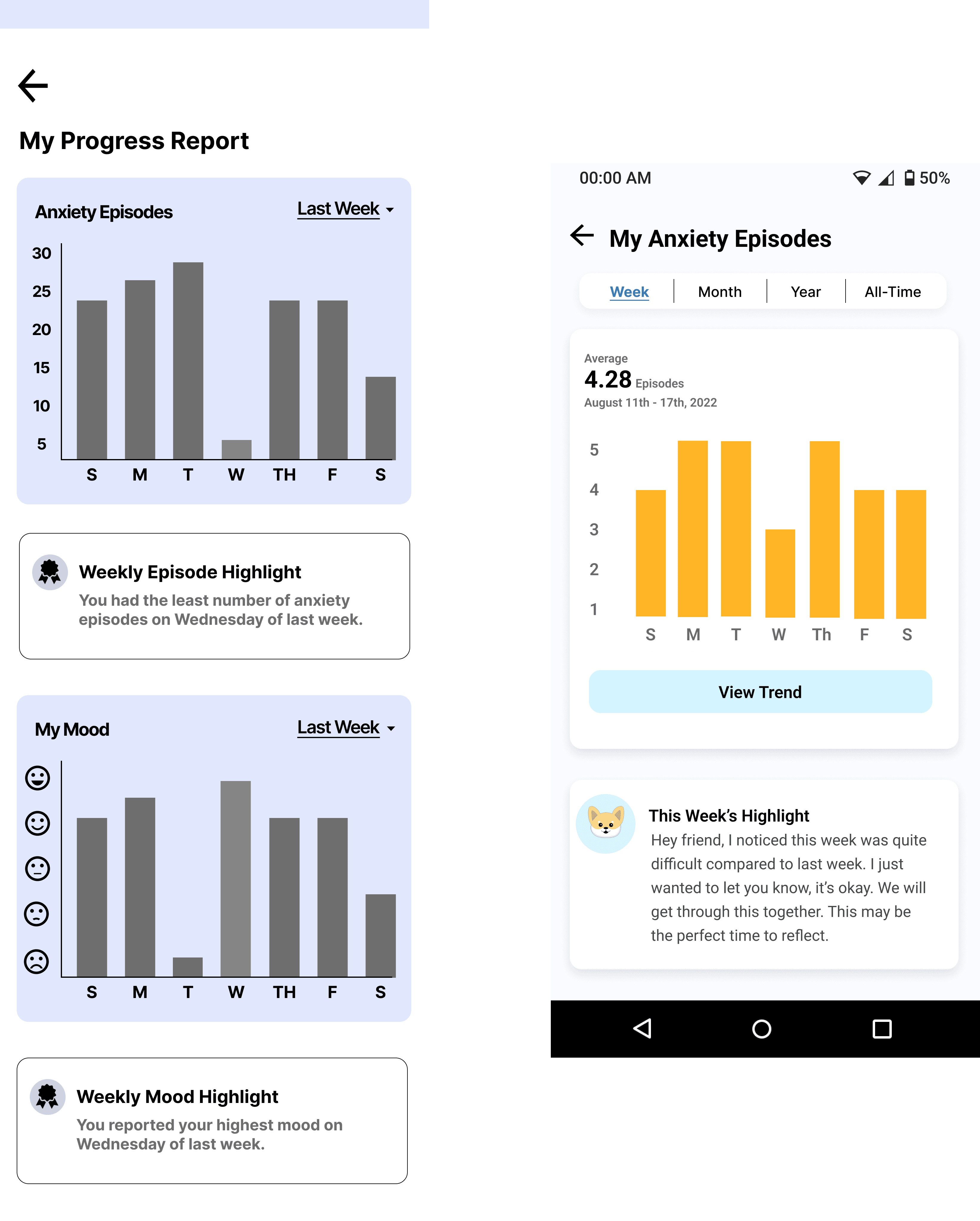
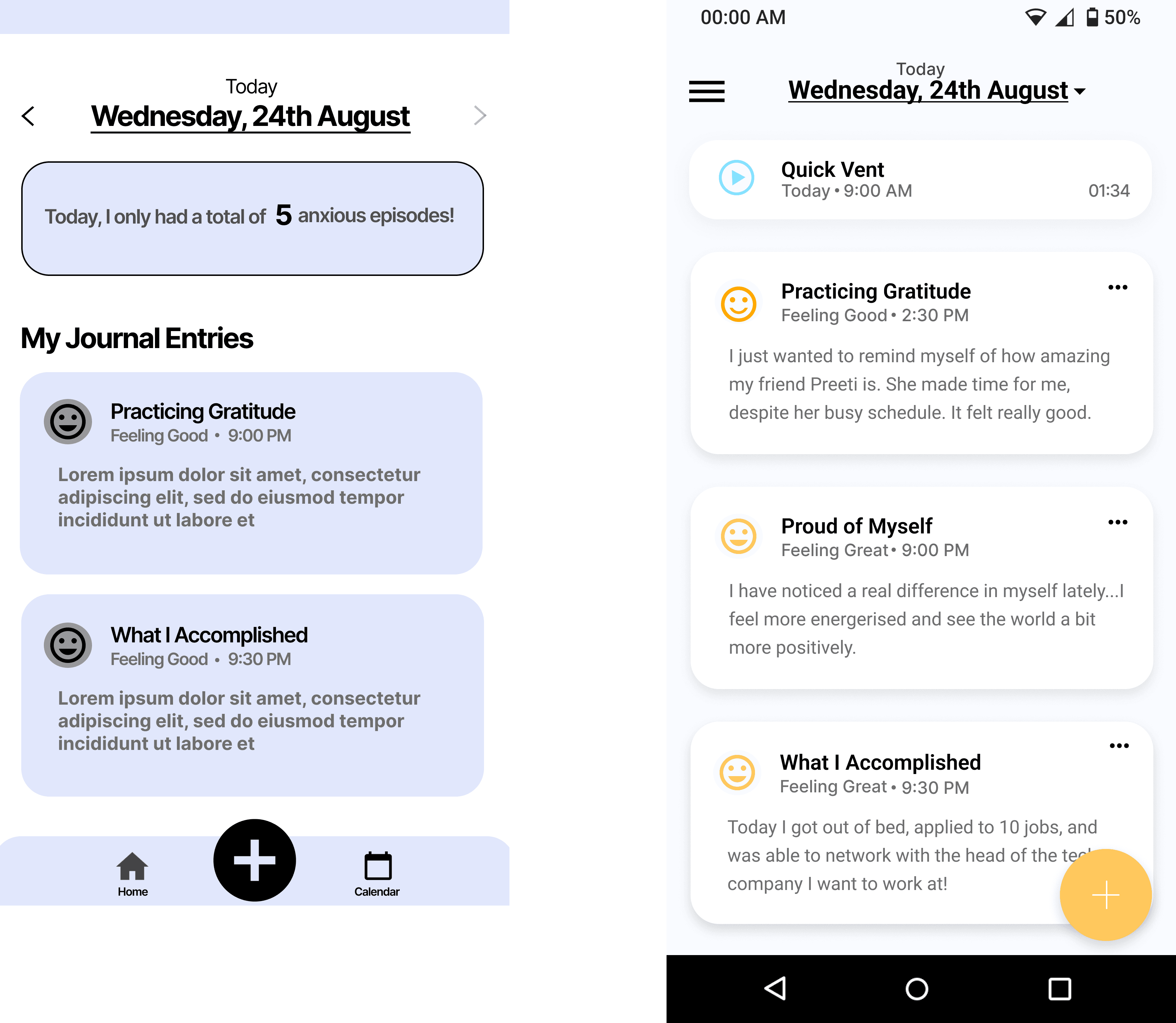
Final User Task Success Rate (TSR)
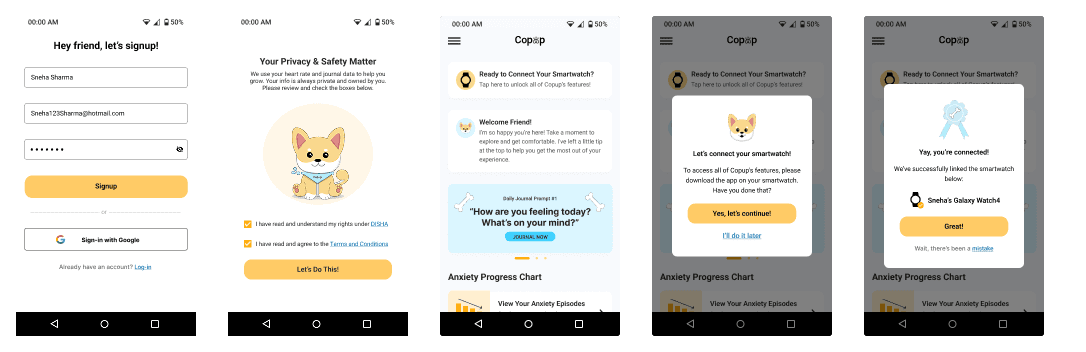
01. Can a user sign up to use the app? (100% TSR).
02. The user successfully gets anxiety help via the smartwatch? (87.5% TSR).
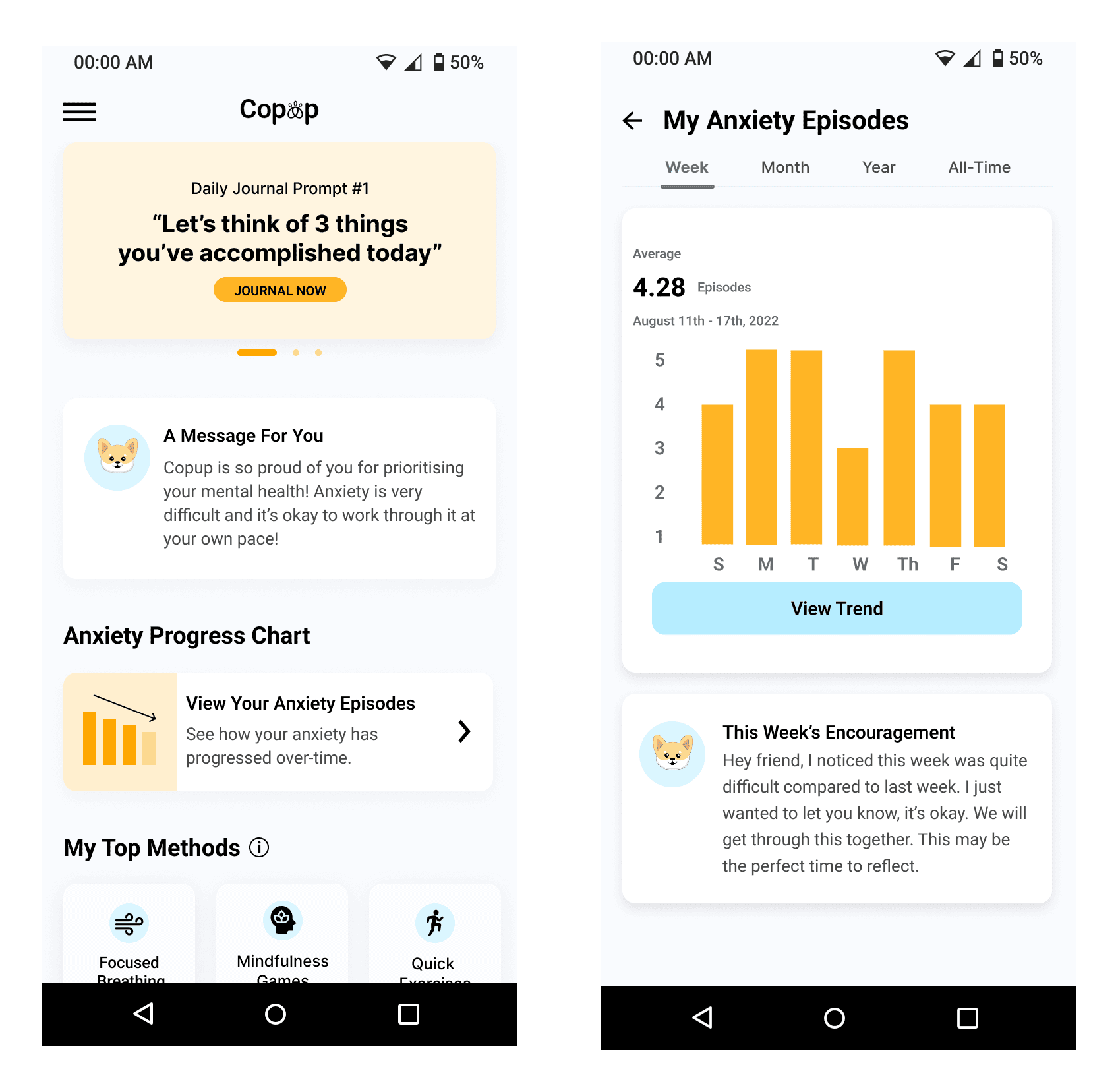
03. Is the user able to view their anxiety episode report? (100% TSR).
04. Can the user create a new journal entry? (87.5% TSR).
CRTICAL CONSIDERATIONS
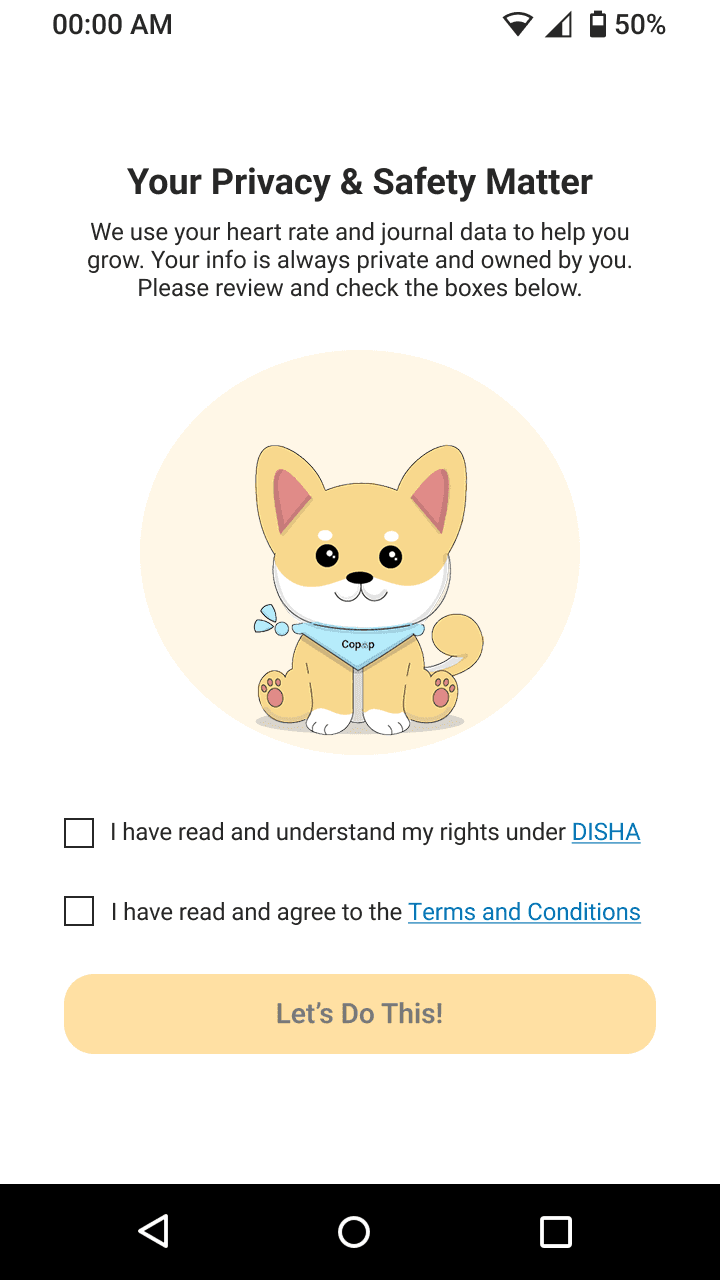
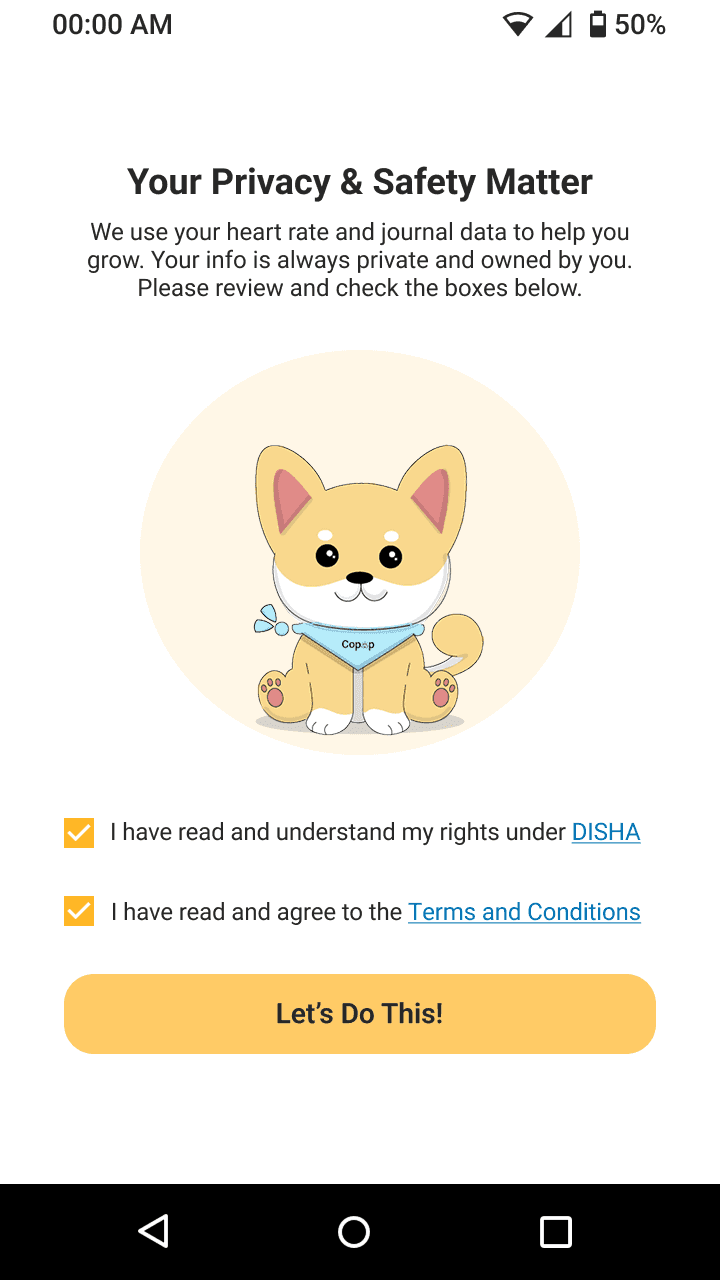
Building User Trust: Adhering to India's Digital Information Security in Healthcare Act (DISHA)
To protect users and adhere to India's legal health tech frameworks, I did research on DISHA, or India's federal measures, to keep that at the center of design decisions.
STYLE GUIDE
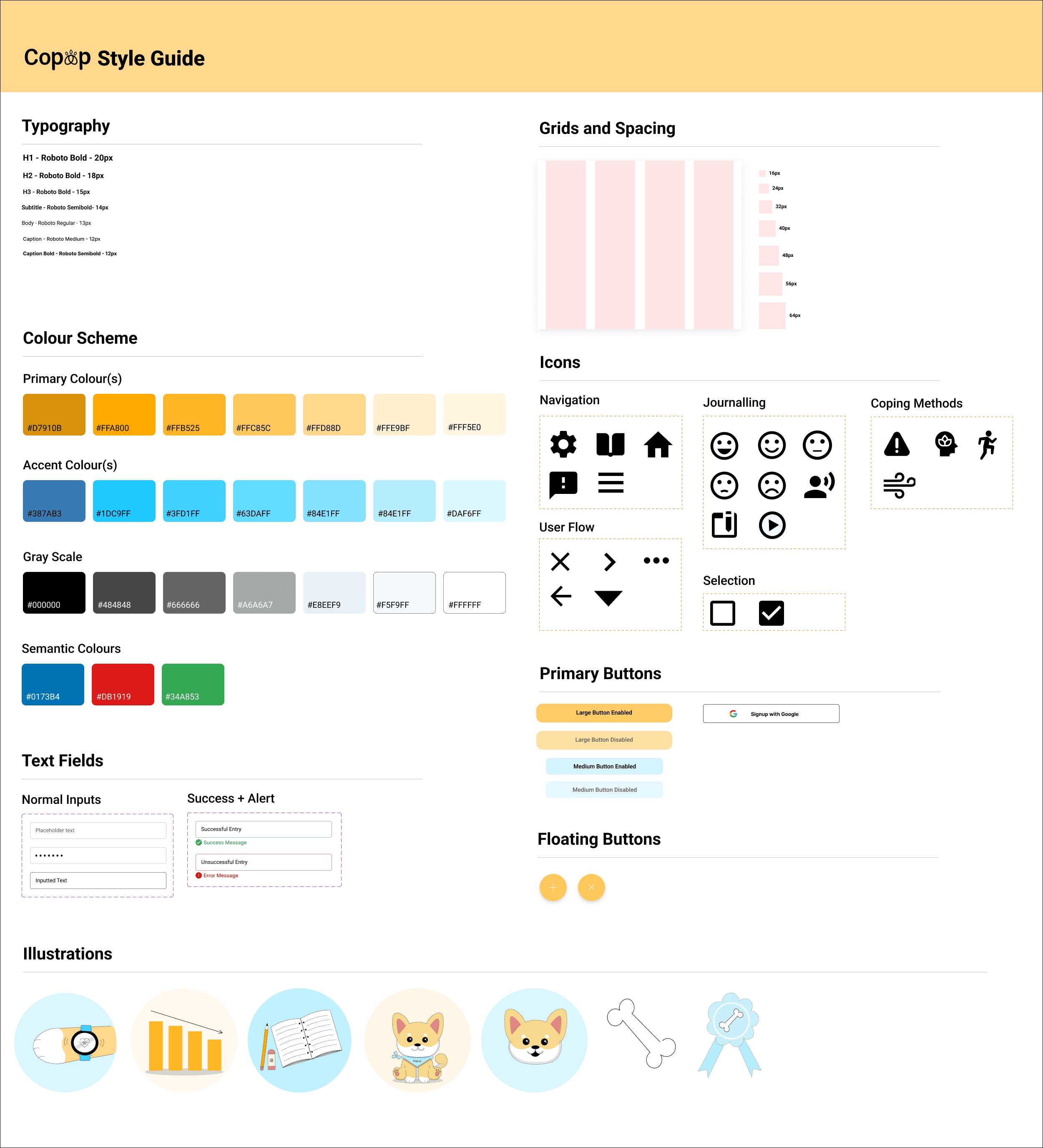
Culturally-Sound, Friendly Branding & UI Design
I took on the role of UI design and brand development. My team and I aimed to encourage and relax our users by creating a sense of gentle friendliness informed by cultural research.
Research Findings
Mascot: puppies, as they are regarded as "emotional support animals."
We want to evoke a friendly, warm tone that is inviting to our users and speaks to their needs for emotional support and aid.
Primary color: orange which is associated with the quest of light, sanctity, and new beginnings in India.
Copup is meant to change lives, allievating the fears, inhibition, and obstacles anxiety poses on our user base.
Secondary color: sky blue as it's known for being calming and evoke the tranquility of nature
Selected for its calming qualities, reflecting the tranquility of the sky and ocean in the culture.
REFLECTION
Health Product Design Must Be Human-Centered
This is one of the personal projects I'm most proud of. There's so much room for improvement, but I learned the value of insights from experts in other disciplines and how to effectively communicate my ideas. I also focused on keeping the team on track with our project objectives.